Friday, April 27, 2012

5 Star Bird: Streak-eared Bulbul at the Furama Resort, Danang.

This Streak-eared Bulbul (Pycnonotus blanfordi) was my daily companion during a recent stay at the Furama Resort in Danang, Vietnam.
The Furama Resort, on China Beach overlooking the South China Sea  (now more properly called Danang Beach and the Eastern Sea) is truely a 5-star hotel and resort.  It not only has wonderful architecture, well appointed rooms, great restaurants,impeccable service.....but also a luxurious tropical garden. 
Furama Danang website
This hectare sized garden features a large lagoon pool and spa, and is festooned with a huge selection of tropical flowers, bushes and trees that attract the fauna normally missing at a beach resort in a large Asian city.
History of Danang on Wikepedia
The famous China Beach.  When I was there for a 3 day R&R in 1967 there were tents, picnic tables and warm beer......but I thought it was GREAT!
China Beach R&R Center
There are over 130 species of Bulbuls in the Pycnonotidae family.

 
There were many other birds in the garden....but "my Bulbul" sat on a branch a few feet from my balcony and sang every morning....what a great wake-up call!
Bulbul songs on Xeno Canto website
Birding in Vietnam is not easy.  Most species are very shy due to unrelenting hunting pressure.  The tropical garden at the Furama is an oasis for our avian friends.  They are protected and become less reclusive.
The Furama Resort is so photogenic that it was the site for a group of 50 photographers from Scott Kelby's Worldwide Photo Walk!
Here's a link to the winners.....there were over 30,000 photographers in over 11,000 locations!

 
In my scrubs waiting for the Vets With a Mission team bus to take us out to our rural free clinic.  We have built over 50 free clinics and field 2 or 3 humanitarian medical teams annually.   When in central Vietnam, we always stay at the Furama.

Thursday, April 19, 2012

Southern Black Racer

 The Southern Black Racer (Coluber constrictus priapus) is quite common throughout the Southern United States.
This non-venomous snake grows up to 60 inches and hunts during daylight, so is frequently seen.  

Saturday, April 14, 2012

Mergansers in the surf at Boca Grande Pass

Red-breasted Mergansers (Mergus serrator) feeding in the surf at Boca Grande Pass.

 Boca Grande Pass is the main channel from the Gulf of Mexico into Charlotte Harbor, Florida.  The Pass is between the southern tip of Gasparilla Island and the northern tip of Cayo Costa.  It is also a "hot spot" for tarpon fishing.

 Red-breasted Mergansers are large diving ducks that prefer feeding in salt water.  This group was after small fish very close to shore.

 A group of ten ducks, they appeared to hunt cooperatively at times....but were more successfull as individuals.

 What great swimmers...agile even in very shallow surf.

 A common sight in bays and lagoons, the Red-breasted Merganser shares it's name with two other Mergansers...the Common Merganser (Mergus merganser) and the Hooded Merganser (Lophodytes cucullatus).

 "GOT ONE!"


 Of "least concern" on the IACU Red List.

 Duck indentification is always a challenge!

 A few yards further offshore were a pair of mating West Indian Manatees (Trichechus ingunguis).

 Commonly seen on Gasparilla Island are Willets (Tringa semipalmata).  This one seemed quite interested in what the Mergansers were doing.


 Looking across the Pass toward Cayo Costa, we saw tarpon fishermen and a small group of Bottlenose Dolphins (Tursiops truncatus).  There are about 200 living in Charlotte Harbor.

It's always a great outing along Florida's Gulf Coast.  This young Laughing Gull (Larus atricilla) in first winter plumage also enjoyed the breezy and sunny afternoon.

Tuesday, April 10, 2012

Birding at SFO

On the way back from Asia, I had an overnight layover in San Francisco.  Stayed at the Airport Mariott and discovered a great birding spot right outside the hotel door!  The San Francisco Bay Trail provided some needed exercise after a long flight, and some great birding in the shallows along the bay.
Here is a Black-necked Stilt (Himantopus mexicanus).

 Google Earth overhead view of SFO International.  The shore to the south is lined with airport hotels and the Bay Trail.
The Trail covers the 500 mile shorline around the Bay.  I only got to walk about five miles, but it was really great.
 Whimbrel (Numenius phaeopus).  Lucky to see during it's migration to Northern Canada.
Hope the Whimbrel is flying Business Class.  Those little seats in Economy are AWFUL!

 Northern Shoveler (Anas clypeata).  A fuzzy long shot with my 200mm zoom.
Northern Shoveller link

 Low tide and plenty to eat!
Duck Identification

On the wing.


Willet (Tringa semipalmata).
Willet link


 Lesser Scaup (Aythya affinis).
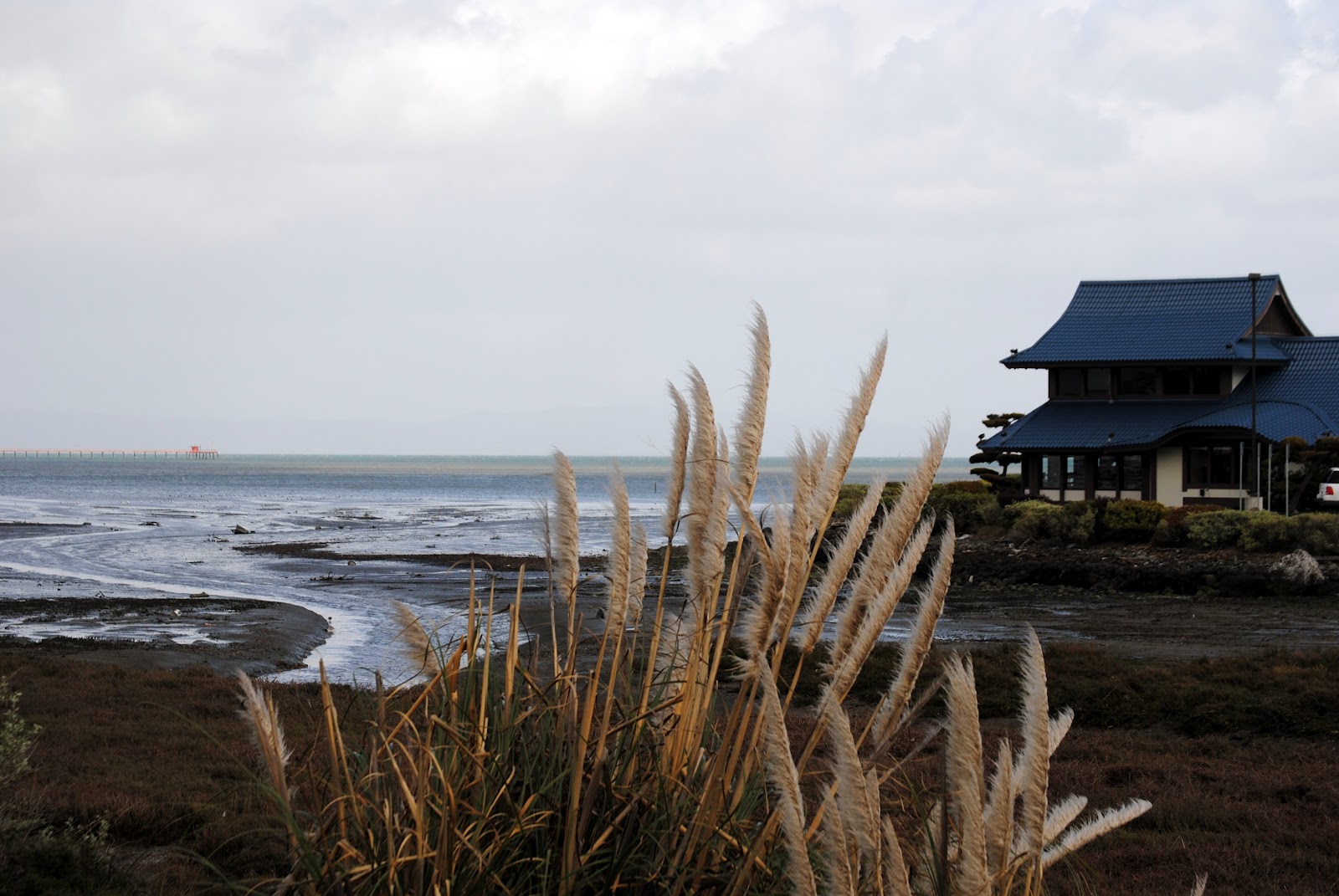
 This nice scene is a Benihana Restaurant along the Bay Trail in Burlingame, Ca.
House Sparrow (Passer domesticus).  Ubiquitous but welcome sight after 6 weeks in Vietnam, a country with a very reduced bird population.  The bombing and shelling during the war decimated the country's birds, and the recovery has been slow as all creatures are considered edible and hunted for food.
House Sparrow link

"Peeps" at a distance....Dunlins?  Sandpipers?  I can't really be sure.
"Peep" ID pdf

Purple Finch (Carpodacus purpureus).

Snowy Egret (Egretta thula).


This was the biggest shock on returning to the U.S. after 6 weeks in Vietnam....WOW!


Tuesday, February 21, 2012

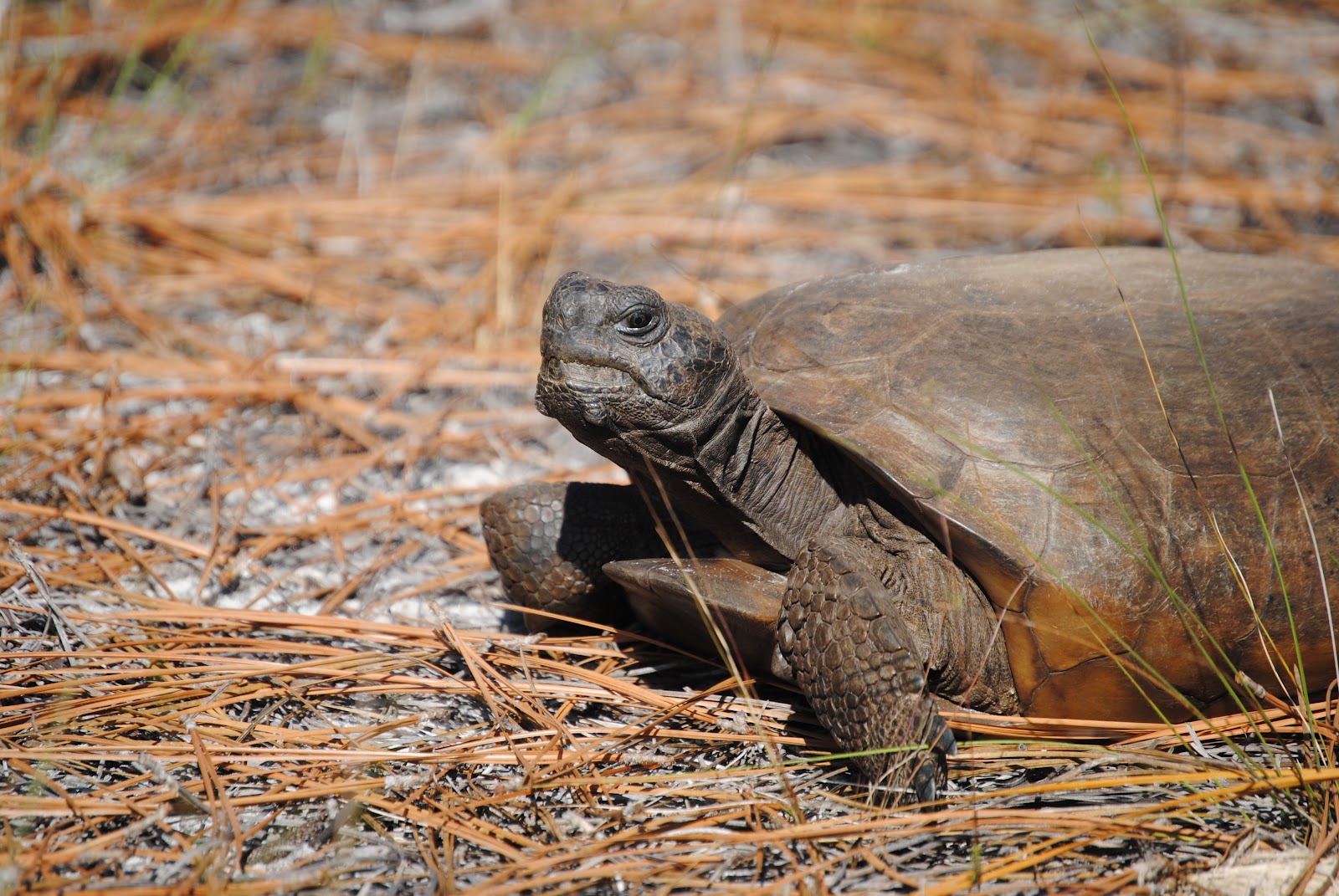
Gopher Tortoise: Nature's Landlord

The Gopher Tortoise (Gopherus polyphemus) is a member of a family (Testudinidae) of ancient North American land tortoises. 
The Gopher Tortoise is found throughout Florida, and in the southernmost portions of Alabama, Mississippi, Georgia and South Carolina.

Of medium size, about 9-10 pounds, individuals live about 50 years in the wild....and up to 100 years in captivity.

Listed as a "Threatened Species" on the Endangered Species List, the main enemies of this slow moving herbivore are cars and land developers.

Polyphemus excavates and lives in burrows which extend from 6 to 50 feet underground.  These burrows are cohabited by over 300 other species....vertebrates, invertebrates....and often the Eastern Diamondback Rattlesnake.
 
Thus, when a Gopher Tortoise burrow is destroyed, the effect is devastating not only to the tortoise, but to many onther species as well.
Why Polyphemus????  Doesn't look like the One-eyed Cyclops from Homer's Odyssey!
Here's an oil on canvas, "Ulysses in the Cave of Polyphemus."  Jakob Jordaens, 1630.

My guess is that the binomial name comes from the Greek, "cave dwelling."  What do you think?


Sunday, February 5, 2012

Brown Pelican

 
Brown Pelican (Pelecanus occidentalis)  diving for small fish in the Gulf of Mexico.  Boca Grande Beach State Park.  Gasparilla Island, Florida.


Saturday, February 4, 2012

Polka-dot Wasp Moth

Polka-dot Wasp Moth (Syntomeida epilais).  Taken in our backyard here in Punta Gorda, FL by wife Olivia.  Kaufman's Field Guide says they are common, but it's the first one we've noticed.
e