Friday, May 13, 2016

American Crocodile

The ranger at the Flamingo visitor center of Everglades National Park told us there was an American Crocodile (Crocodylus acutus) hanging around the concession marina.  Sure enough, she was....and we saw two young.....probably the reason she was there.


About 10-12 feet long....she swam in and out of the mangroves....sometimes went underwater and popped up a distance away.   This was in a canal just a few feet from the marina's canoe and kayak rental dock!


 "Despite its shy nature, an American crocodile is still a predatory animal and can be dangerous. You should never approach a crocodile"
The above quote is taken from a Florida FWC webpage about the American Crocodile.  He is much too close....trying to get a cellphone photo......meanwhile the canoe rental attendant was yelling...."Senor, get out of there....hurry up senor.....now!"
People are stupid.....I wonder why the Everglades NP rangers have not done anything to keep idiots away from this female who was hanging around the Flamingo marina because she had young back in the mangroves.  Isn't it the job of ENP rangers and FWC to protect imperiled species?


It only got worse....here come The Three I-Phone Stooges.....chasing the Croc back into the mangroves.  She turned around and faced them off.....meanwhile......"Senors....get back to the dock....get away.....rapido!!!!"

What is more important in our precious national parks?  Commercial concessionaires, ignorant tourists....or the natural environment and the imperiled species who live there? 

Tuesday, May 10, 2016

Big Cypress Wildflowers in May

Olivia and I stopped at the Kirby S Storter Park in Big Cypress.  We planned on a boardwalk stroll....but noticed that the "wet prairie" was dry enough for a walk...and was loaded with wildflowers (early May).  Here's what we saw.


Showy Milkwort (Polygala grandiflora).
Flowers look like orchids....and milkworts (though not apparently P. grandiflora) were used medicinally by the early Seminoles.

Ethnobotany of Early Seminoles.....great thesis!


   Purple Thistle (Circium nuttalii).
Lots of thistle species with lots of medicinal uses....


Marsh-Pink (Sabatia stellaris).
One of the most common wildflowers in the Everglades.


Coastal Plain Yellowtops (Flaveria linearis).
Beautiful native plant for your garden....and butterflies love it!

UF bulletin


Longleaf Milkweed (Asclepias longifolia).
Any and all milkweeds are great butterfly garden plants.

Milkweeds wiki link.....good stuff!


Cardinal Airplant (Tillandsia fasciculata).
A genus of over 700 species!

Tillandsia


Endangered in Florida.  Larvae of the Mexican Weevil (Metamasius callizona) kill the plant.


UF/IFAS photo
Mexican Bromeliad Weevil.   This is one of several color variations.


Small's Flax (Linum carteri)
Endangered in Florida, although locally common in Big Cypress.
Flax is a very ancient herb....said to have powers of "money, protection, beauty, healing and psychic powers".....and protection against witches!!
Didn't see any in Big Cypress....now I know why!


Sabatia stellaris (pursh)


Pineland Heliotrope (Heliotropium polyphyllum).
Flowers tend to be white in Big Cypress and Corkscrew Swamps....but yellow in the Everglades National Park!
All species of Heliotropium have similar chemical qualities and were used by native Americans and South American Indians for diarrhea!


Cowpea (Vigna luteola).
Larval host plant for Long-tailed and dorantes Skippers!
Used to treat "ghost sickness" in Polynesia.


Fringed Yellow Stargrass (Hypoxis juncea).
Hypoxis species have long been used in traditional African medicine.


Starrush Whitetop Sedge (Rhynchospora colorata).
Common in wet prairies....attracts pollinators.


Buttonbush (Cephalanthus occidentalis).
Deciduous shrub....loves water....good for a water garden.


 Swamp Lily  (Hymenocallis ?palmeri).


Mystery plant!  Help, help!  Cannot ID in any of my field guides.


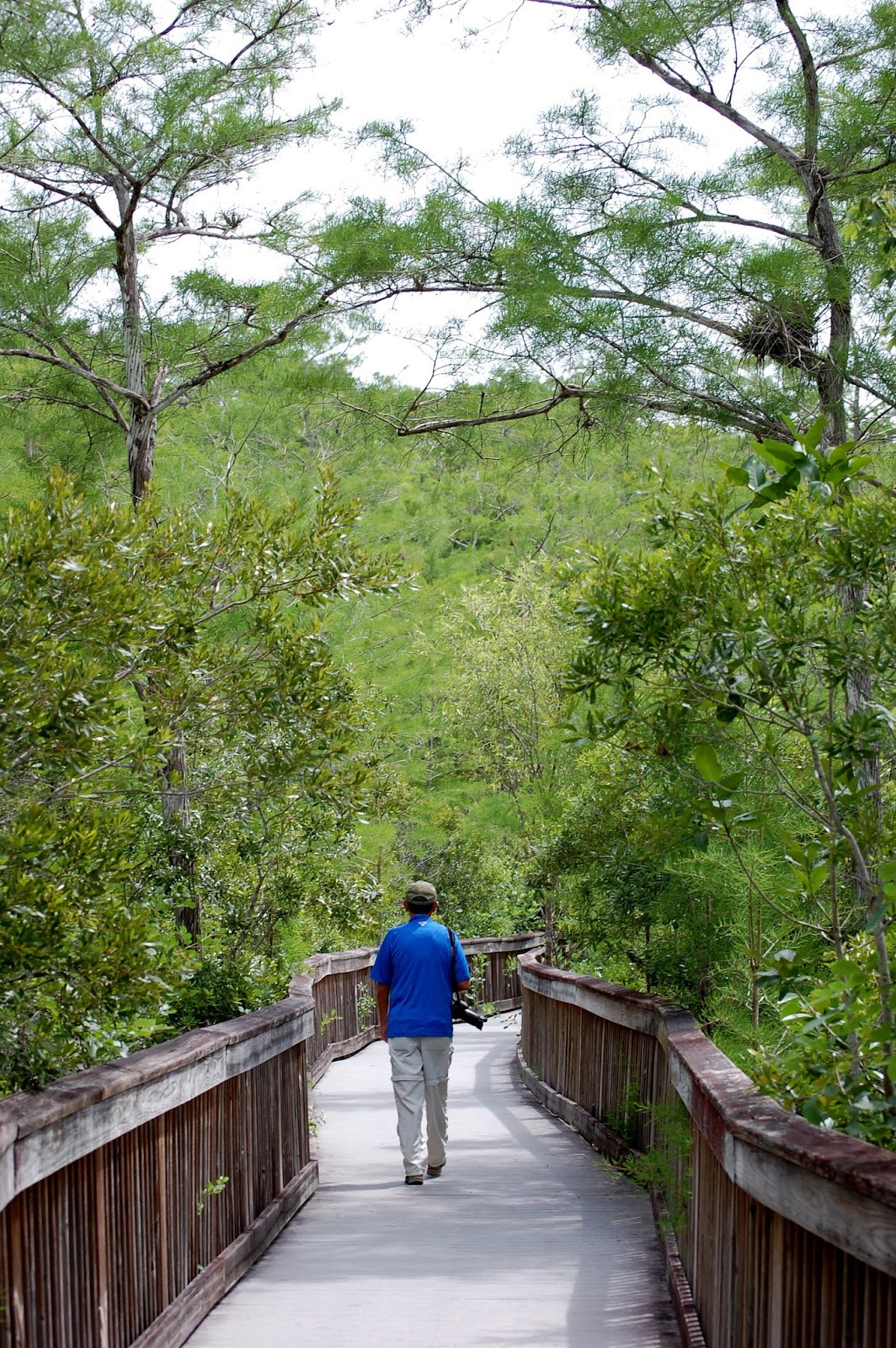
A quick stroll on the boardwalk before heading to 
Everglades National Park.
Clyde Butcher was instrumental in the building of the boardwalk so that the public could enjoy Big Cypress as much as he did.


Cypress swamps are so very amazing!


It's dark and wet in the swamp, but you will still find some wildflowers there!

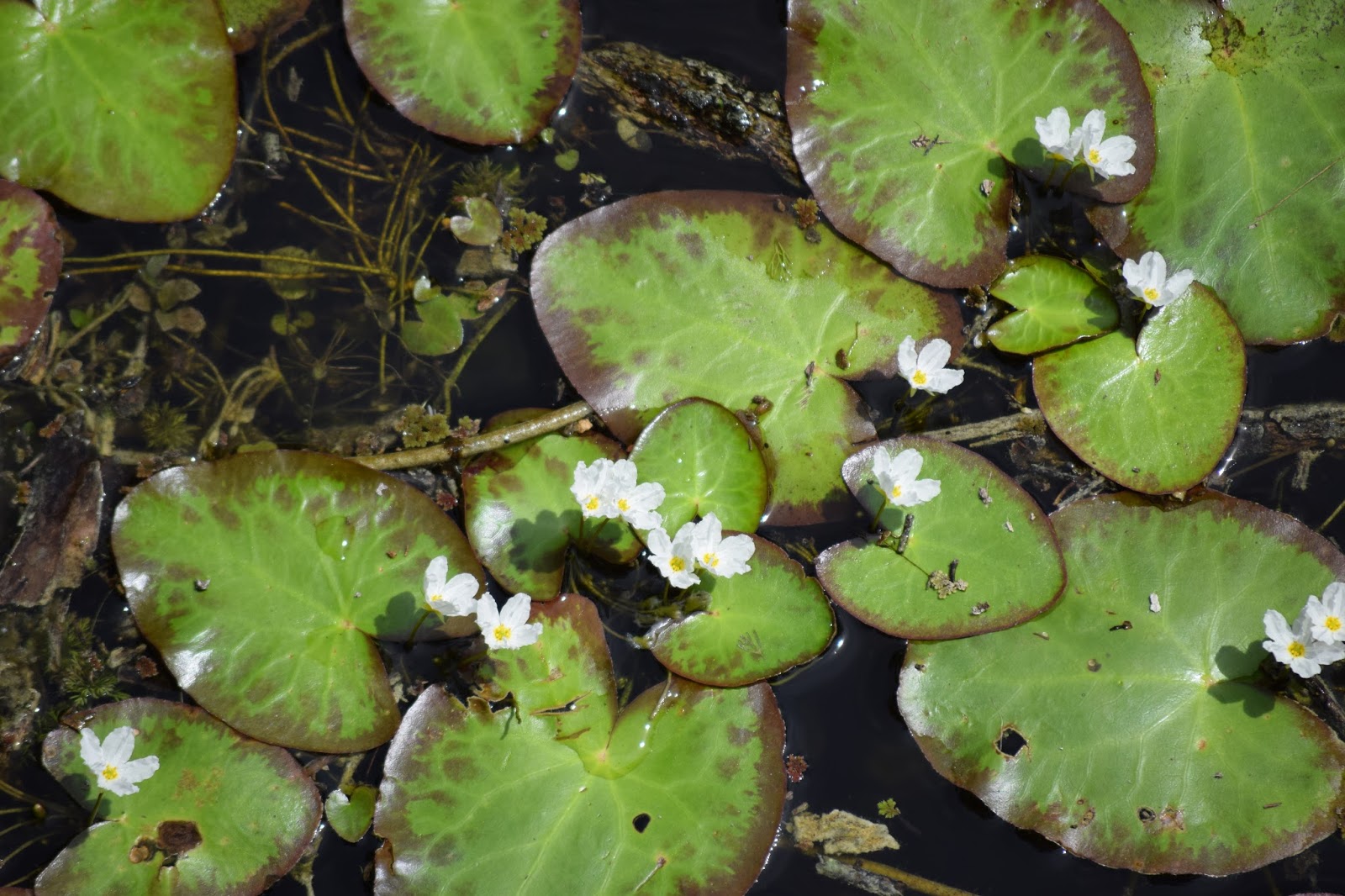
 Crested Floating Hearts (Nymphoides crista).
Similar to waterlillies, but not the same family (Nymphaea).

Popular in ponds and water gardens!


Water Hyacinth (Eichornia crassipes).
Fast growing and declared a "noxious weed" it clogs waterways all over South Florida.  

Wiki link....very interesting!


Our "go to" field guide for Big Cypress, Corkscrew and the Everglades.

I have tried to get good ID on all species, but will gladly defer to any and all botanical cognizatee.
Photography by both of us....but I think Olivia is the better shooter!


Thursday, April 28, 2016

Looking into tree holes along the 3 Lakes Trail!

Just an afternoon stroll along Charlotte Harbor Environmental Center's Alligator Creek 3 Lakes Trail. 
Above is an Eastern Screech Owl (Megascops asio) in gray phase.


Wild bees in an old stump!  VERY active.....didn't want to get close enough to disturb them.  They look like Apis mellifera but I wondered if they were Africanized?


Sunday, April 24, 2016

Julia goes free on Earth Day!

 What better way to celebrate Earth Day than to renew and rededicate the butterfly garden at the Alligator Creek campus of the Charlotte Harbor Environmental Center. 
 
 
 There is an interesting link between each photo....drag your cursor down to find them! 


 Volunteers from the Punta Gorda Garden Club and CHEC renewed and replanted the butterfly garden....specially designed for three species:  Zebra Longwing, Gulf Fritillary and Julia.


 Thomas Hecker, CHEC CEO, gave an interesting and informative talk about the garden and the butterflies about to be released. 


All three species and their instars were released to the garden.  There they found favored host plants:  Corky Stem Passion Vine (Passiflora suberosa) and the showier Passionflower (Pasiflora incarnata).  There is also an abundance of nectaring flowers...and pollen for the Zebras!


Tom explained that the three species to be released were all members of the subfamily Heliconiinae, a large group of tropical butterflies with similar habits,  caterpillar food preferences and habitat.


 Though farm raised, these longwings should do well at the CHEC garden.
If you want to see more tropicals, be sure to plan a visit to the University of Florida and the Tropical Rainforest there


 Everyone ready for the release?  Cameras at the ready!
 
Want to raise some butterflies at home?  Here's a good source of information and tips.


 Julia Longwing (Dryas iulia).


 Photographing butterflies is fun....they come out in the sunshine, and "sometimes" spread their wings and hold still!


 SW Florida is at the extreme northern end of the Julia's range.  We have experienced some warmer winters, without frost, recently.  Will we see more of this beautiful butterfly?
Makes one think more about climate change and how creatures adapt.  I guess that is something to consider every day, not just on Earth Day.


Instars were also released.


Gulf Fritillary (Agraulis vanillae)


Zebra Longwing (heliconius charithonia). Florida's state butterfly


A couple of other visitors to the garden on Earth Day.
Great Southern White (Ascia monuste).


White Peacock (Anartia jatrophae)


The ladies who made it all possible!
THANK YOU SO MUCH FOR A GREAT EARTH DAY!


Lots more to see at CHEC Alligator Creek.